

Comprehensive Enterprise ERP Platform
Unified ERP platform harmonizing all core business functions: Human Resources (HRM), Customer Relationships (CRM), KPI performance, Distribution Agencies, multi-location Warehousing, and Executive BI.

Every workflow into one ledger. No more duplicate data entry between departments.
ERP brings sales, inventory, HR, performance and contract data into one place for continuous books and financial reporting.
Data flow: Sales, Inventory, HR, KPI & performance, E-contracts, 360° assessment → ERP → Finance & reporting, Executive dashboard, Payroll
Core modules within the ERP suite
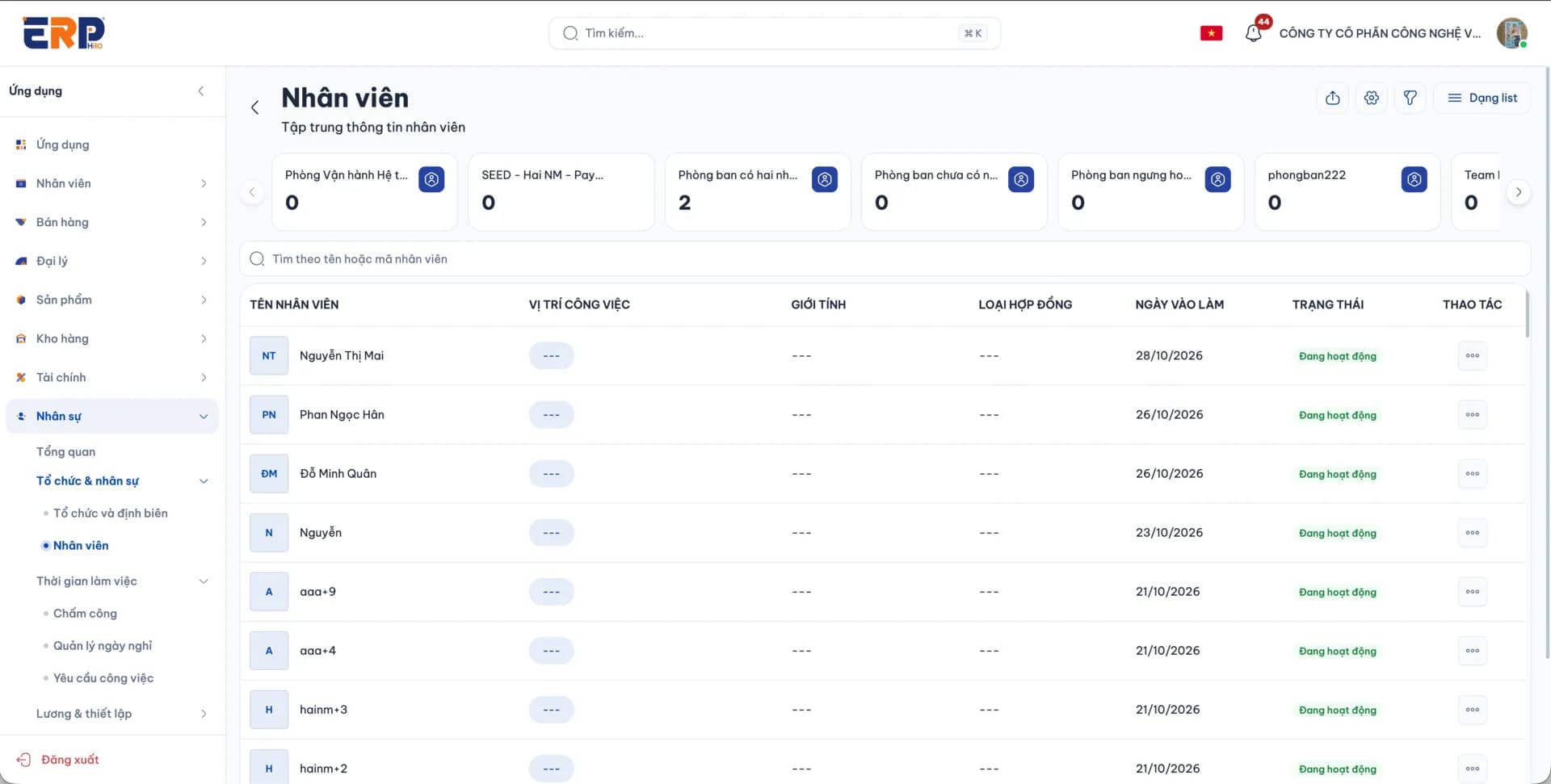
HRM & Digital Employee Profiles
Centralized digital employee directory organized by departments, contract types, and active employment status.
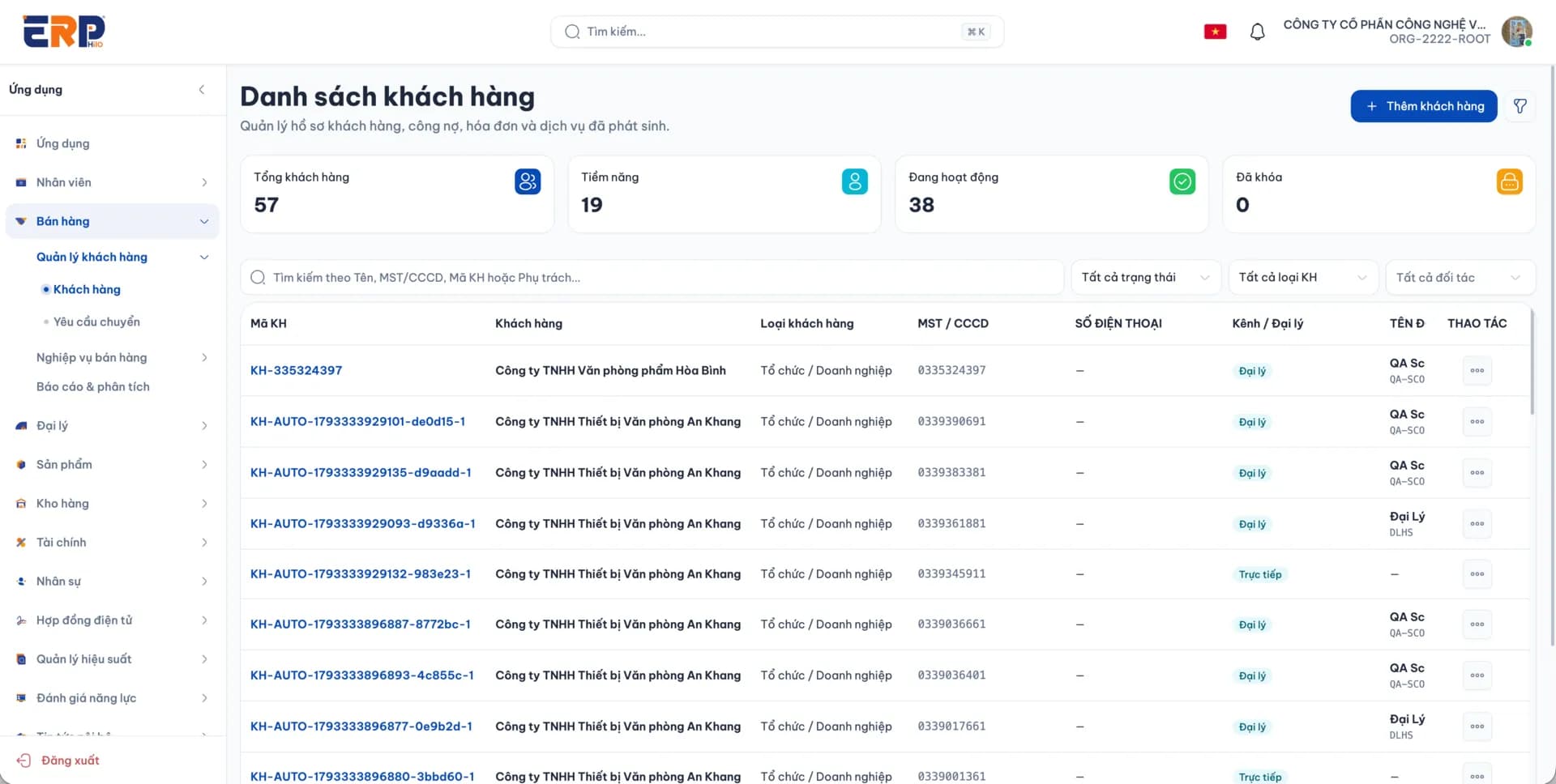
CRM & Customer Portfolio Management
Track customer profiles, filter leads and active accounts, and inspect tax IDs and agency distribution channels.
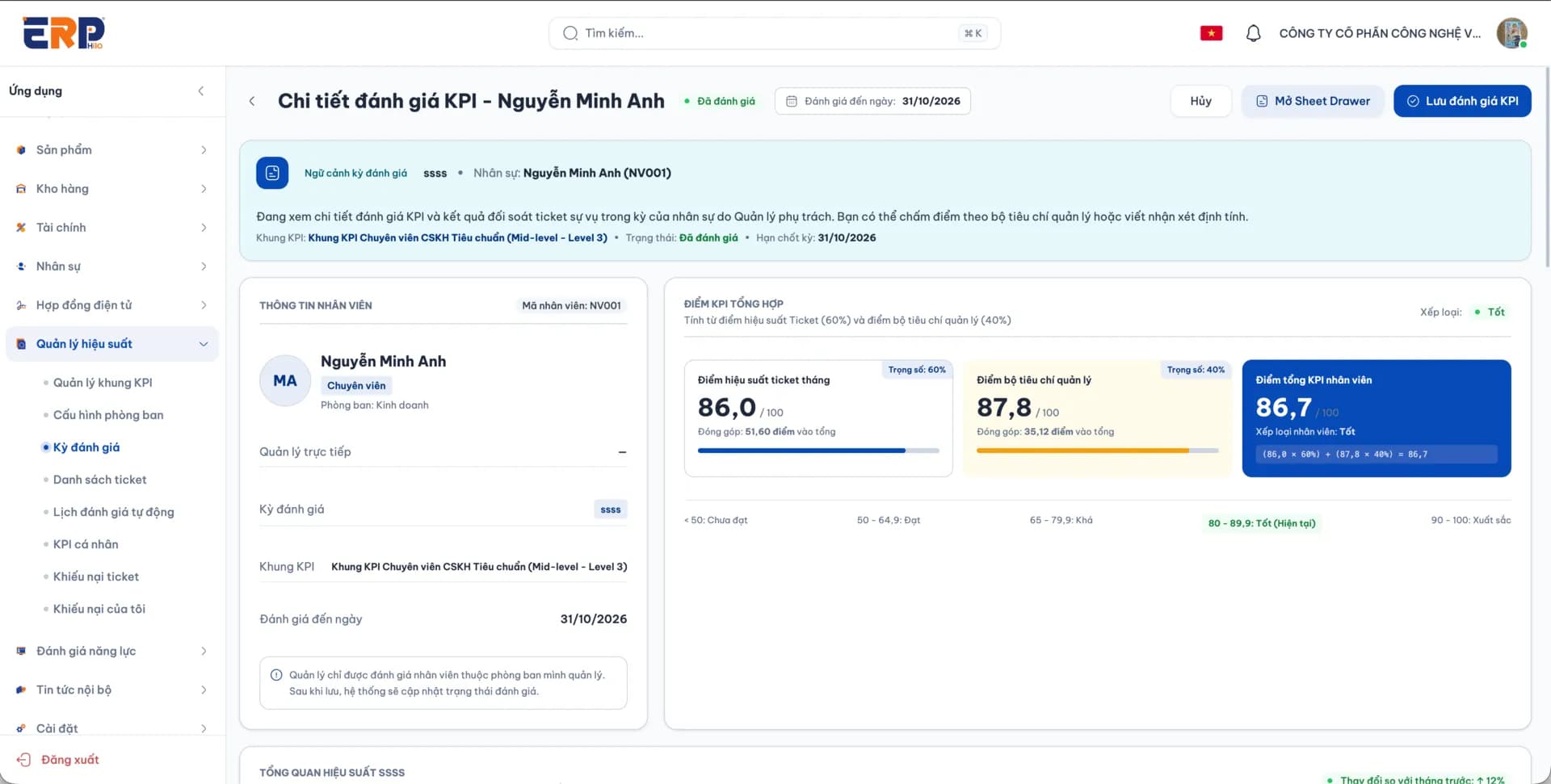
KPI Goals & Performance Evaluation
Transparent weighted scoring combining automated ticket performance and managerial criteria with objective ratings.
B2B Agency & Distribution Network
Manage tiered agency partners, supervise branch agents, and monitor operational status and membership tiers.

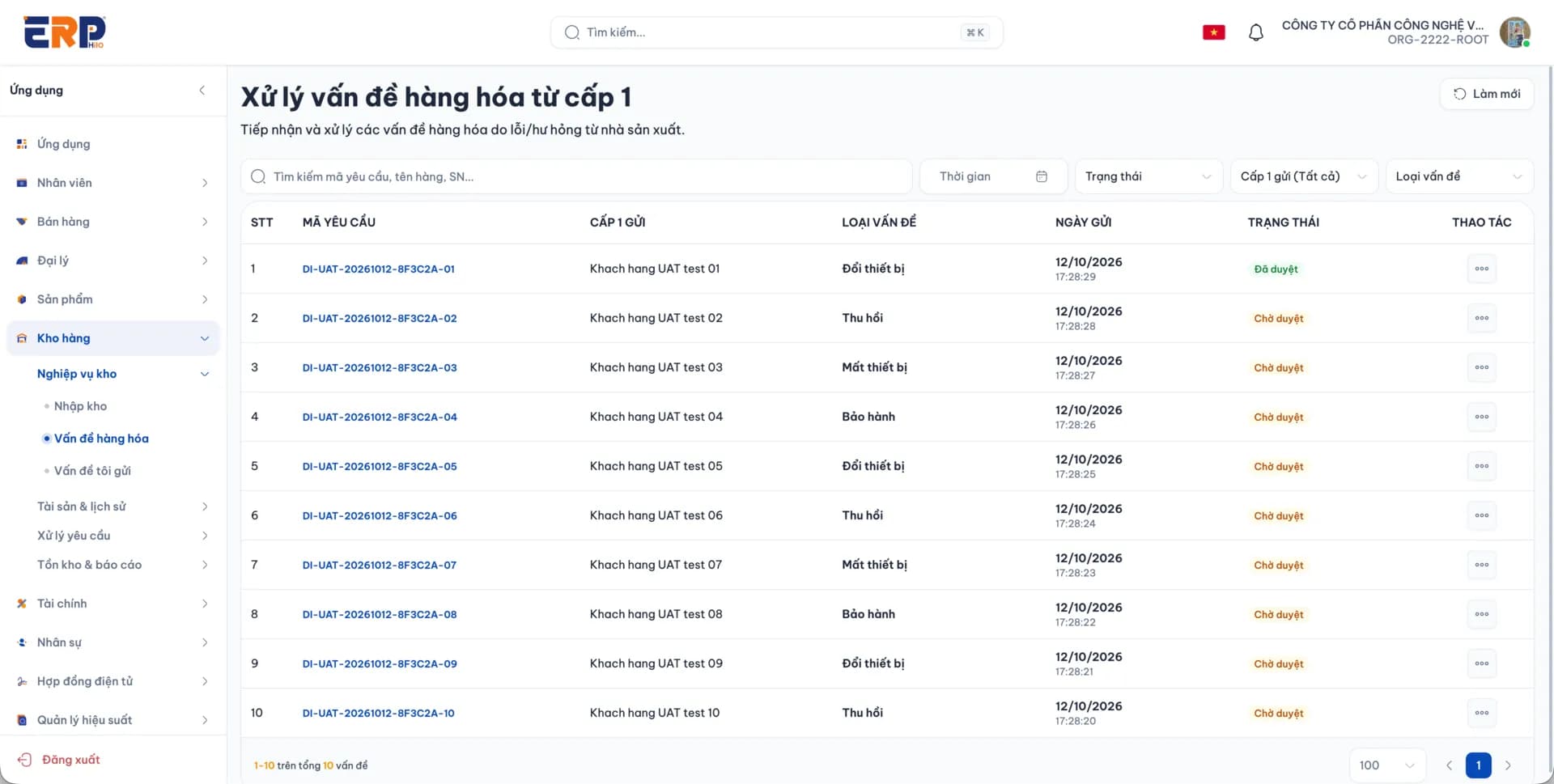
Logistics & Merchandise Issue Handling
Receive and resolve merchandise RMA tickets: equipment exchange, recovery, warranty claims, and status approvals.
Order Fulfillment & Service Revenue
Track orders and their value, separating new purchases from service renewals across hardware and software.

How is ERP implemented?
Process survey
Understand how the business runs today and its management goals.
Configuration design
Design modules, permissions and approval flows.
Data migration
Clean and import master data, stock and balances.
Training and pilot
Train users and run in parallel before go-live.
Go-live and support
Launch, support and improve from feedback.
Benefits of ERP
A single source of truth
All departments share the same data with no duplicate entry.
Faster month-end close
Automated reconciliation speeds up month-end closing.
Better cost control
Limit-based approvals and cost reports by department.
Explore the ERP Interface
Unified personnel directory, contracts and employee profiles
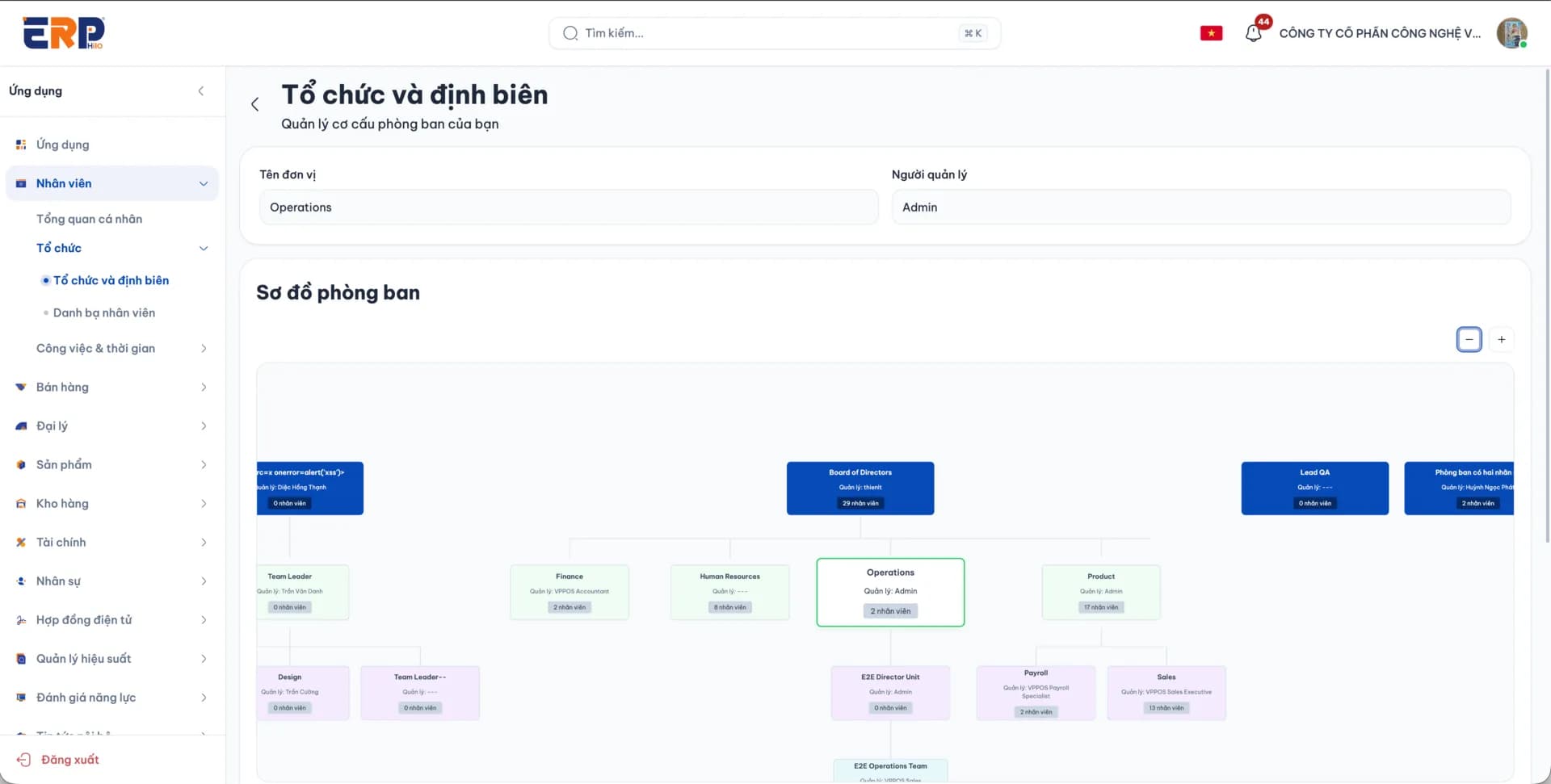
Visual organization hierarchy and departmental directory
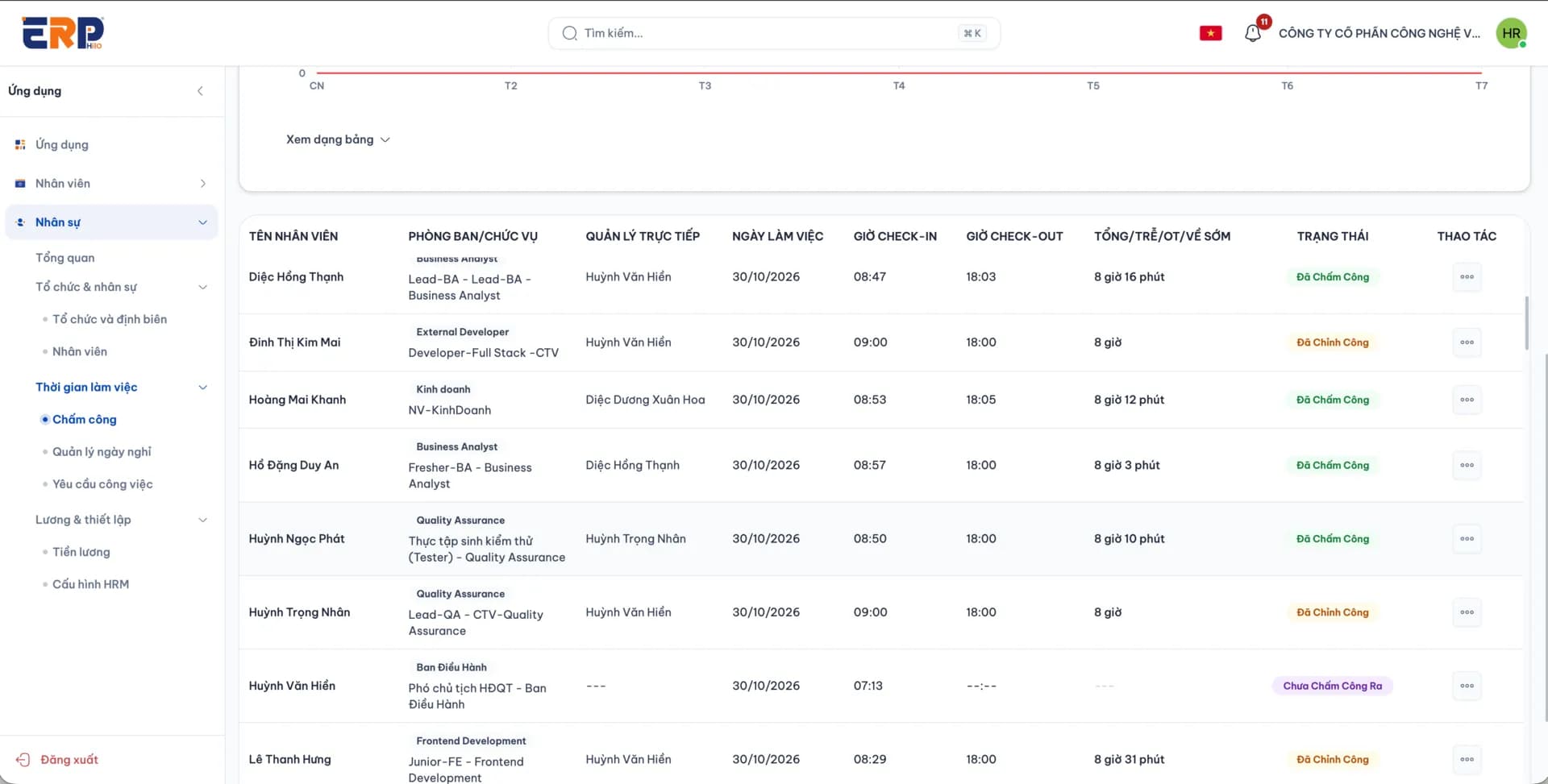
Track daily attendance data, shifts, and leaves in real time
How is ERP different from accounting software and POS?
Frequently asked questions about ERP
ERP includes accounting, purchasing, sales, inventory and HR modules. You deploy only the modules you need now and add more later. All modules share one database, so figures stay consistent across departments.
ERP suits small and mid-sized companies up to multi-branch organisations, typically from about 20 employees. The system scales with the number of users and modules. We survey your real processes before proposing a deployment scope.
A rollout typically takes two to four months, depending on the number of modules and the level of customisation. It covers survey, configuration, data migration, training and a pilot run. We phase the work so you can start using the most important modules early.
Yes, VPPOS supports migrating master data, inventory, receivables and opening balances from Excel or legacy software. Data is cleaned and reconciled before loading. You review the results with us before going live.
Yes, ERP integrates with e-invoicing and can connect to banking services to reconcile transactions. The exact scope depends on the providers you use. Our engineers confirm connectivity during the survey phase.
Get started with ERP
Describe your current process and VPPOS will propose a rollout scope and estimate within 3 business days.
Request a consultation & demo
Our solution specialists will reach out within 2 business hours.